Inside the article
Request a product demo
Get a demo and clarify your doubts about our software.
Key Takeaways
- The US dump trailer rental market is growing from $2.2 billion in 2025 to a projected $3.0 billion by 2035.
- A single 7x14 trailer rented 15 days a month can clear $1,200 to $1,800 in monthly profit.
- Most owners break even in 6 to 14 months, depending on whether they buy used or new.
- Contractors, landscapers, and homeowners are your three most reliable customer groups.
- Legal setup, the right insurance, and a signed rental agreement protect you from day one.
Dump trailers do not get much attention, but the people who rent them out quietly build solid businesses. Contractors need them. Landscapers need them. Homeowners need them for cleanouts and repairs. The demand is steady, the startup costs are manageable, and you can start with one trailer.
This guide covers everything you need: trailer selection, costs, legal setup, revenue streams, daily operations, finding customers, and how to scale when you are ready.
Is a Dump Trailer Rental Business Worth Starting?
Market Demand and Who Rents Dump Trailers
The customer base is wider than most people expect. Homeowners rent dump trailers for garage cleanouts, yard work, and home repairs. Contractors use them during construction and demolition jobs. Landscapers haul mulch, soil, gravel, and stone. About 45 percent of contractors now prefer renting equipment per job rather than buying, which creates steady demand without you having to convince anyone of the value.
The US equipment rental industry as a whole is projected to reach $87.5 billion in 2025, according to the American Rental Association.
How Much a Dump Trailer Rental Business Can Earn
A 7x14 dump trailer rents for $150 to $250 per day. Rent it out 15 days a month, and you bring in roughly $2,700 in monthly revenue. After fixed costs, you can clear between $1,200 and $1,800 per month from a single trailer. That improves as you add units.
How Long Does It Take to Break Even
A good used 7x14 trailer costs $6,000 to $10,000. At 15 rental days a month, most owners cover that cost in 6 to 10 months. Buy new, and the timeline stretches to 10 to 14 months, but you get a warranty and fewer early repair bills.
How to Choose the Right Dump Trailer for Your Rental Business
Trailer Sizes and What Each Market Needs
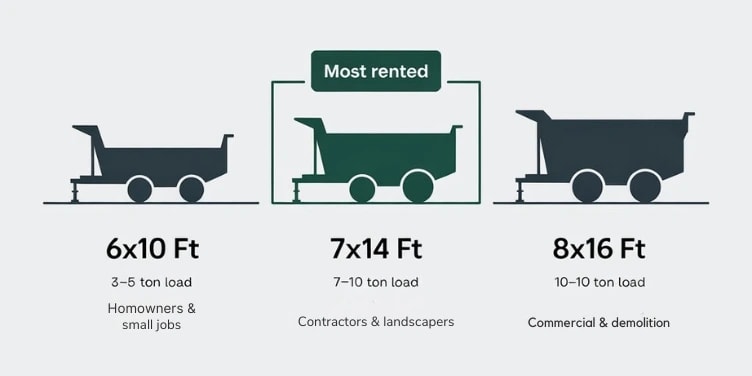
Three sizes cover most of the market. The 6x10 works for homeowners and small jobs and tows with a regular pickup. The 7x14 is the most rented size and the best starting point - it covers contractors, landscapers, and mid-size jobs without a heavy tow vehicle. The 8x16 and larger bring in commercial and demolition clients, but need a bigger truck. Start with one 7x14.
New vs Used: What Makes Financial Sense
New trailers come with warranties and lower early repair costs. Used trailers cost less upfront and get you to break even faster. For most first-time owners, a well-maintained used trailer is the smarter move. Before you buy, check the hydraulic lift, bed welds, brakes, and tires. Those four things cause most of the problems.
If you are still working through the broader business setup - LLC, operational plan, inventory decisions - our guide on starting a rental business covers each of those steps in order.
Key Features to Look for in a Rental-Grade Trailer
Look for a strong hydraulic cylinder, thick steel flooring, a solid tarp system, sealed LED lights, and a simple dump gate latch. Bad latches and faulty wiring cause the most complaints.
What It Costs to Start a Dump Trailer Rental Business
Equipment and Trailer Purchase Costs
A used 7x14 ft dump trailer runs $6,000 to $10,000. A new one costs $9,000 to $15,000. That is your biggest single expense and your baseline for calculating break-even.
Insurance, Registration, and Legal Setup Costs
- Commercial auto insurance: $2,500 to $5,000 per year
- General liability insurance: $600 to $1,200 per year
- LLC setup: $50 to $500, depending on your state
- Trailer registration: $200 to $400
Your personal auto policy does not cover business use. Do not skip the commercial coverage.
Storage, Maintenance, and Ongoing Fixed Costs
Rented storage runs $100 to $300 per month. Set aside 5 to 10 percent of monthly income for maintenance. Tires, hydraulic fluid, and brake work come up regularly. A single mechanical failure during a busy stretch costs far more than the upkeep would have.
Variable Costs That Change With Usage
Fuel for drop-off and pickup runs $20 to $60 per trip. Track these per rental so you know your real margin, not just your total income. As bookings grow, fuel becomes one of your higher variable costs.
Licenses and Legal Requirements for a Dump Trailer Rental Business
Business Registration and EIN Setup
Set up your business as an LLC. This keeps your personal finances separate from any business debt or claims. Apply for an Employer ID Number on the IRS website. It is free and takes about ten minutes.
Commercial Insurance and Liability Coverage
You need commercial auto insurance to cover the trailer on public roads and general liability to cover damage or injury claims. A $1 million limit is standard for both. Look for providers that work with equipment rental businesses specifically.
DOT Number, Operating Authority, and Vehicle Registration
If your trailer weighs over 10,000 lbs and you tow it for business, you may need a US DOT number. Rules vary by state, so check with your state transport office before you start hauling.
Zoning Permits and Storage Location Compliance
Check local zoning rules before storing trailers at home or at a rented lot. Some areas ban commercial vehicles in residential zones.
Sales Tax Permit and State-Specific Rules
Most states require you to collect sales tax on equipment rentals. Get a permit before your first booking and have a local attorney review your rental agreement.
Ways to Make Money With a Dump Trailer Rental Business
Dump trailers are more versatile than most people realize. Here are the main revenue streams worth targeting.
Junk Removal and Residential Cleanouts
Homeowners clearing garages and old properties rent for one to three days and often return. This is your most accessible starting market.
Construction and Demolition Debris Hauling
Small contractors doing home repairs and teardowns generate large amounts of waste. Many rent throughout a job, giving you multi-day bookings.
Landscaping Material Delivery
Landscapers move mulch, topsoil, gravel, and stone. Some book weekly during busy seasons, giving you steady repeat income.
Mobile Dumpster Rental Service
You drop the trailer off, the customer fills it, and you haul the waste away. This adds a service fee on top of the base rental and increases revenue per booking.
Foreclosure and Rental Property Cleanouts
Property managers need regular cleanouts for empty units. One solid relationship can bring in steady monthly work.
Scrap Metal and Firewood Transport
Scrap buyers and firewood sellers often rent on a set schedule, helping fill your calendar with predictable bookings.
Equipment and Tool Transport for Contractors
Contractors sometimes use dump trailers to move small machines between sites, expanding your customer base beyond debris removal.
What It Takes to Run Day-to-Day Operations Profitably
Managing Trailer Utilization and Availability
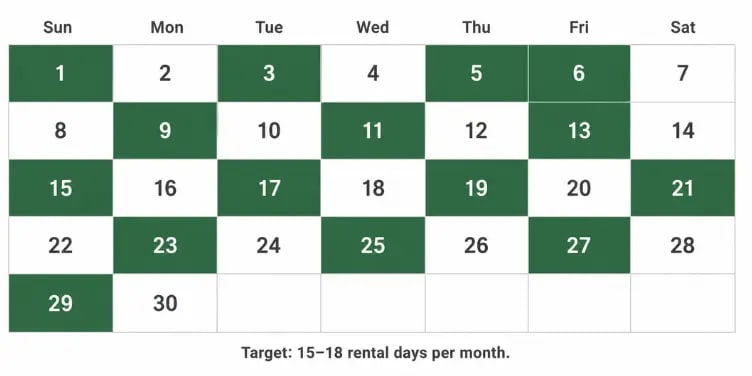
Aim for 50 to 60 percent utilization in your first year - that is 15 to 18 rental days per month. If you drop 40 percent consistently, look at your pricing or marketing before adding a second trailer. Use a booking calendar so customers can check availability without calling you.
Setting Rental Rates and Pricing Strategy
Check what others charge on Facebook Marketplace and Craigslist. Offer daily, weekend, and weekly rates. Weekend rates can run slightly higher. Weekly rates should include a small discount for longer bookings.
Reaching Break-Even and Tracking Profitability
Add up your monthly fixed costs and divide by your daily rate. That tells you how many rental days you need just to cover expenses. Track income and spending from day one so you know when it is time to add a second trailer.
Handling Damage, Deposits, and Rental Agreements
Use a signed rental agreement for every booking covering dates, rate, deposit, damage rules, and safe loading weight. Collect a $200 to $500 deposit upfront and take photos before and after each rental. Most owners who skip this step regret it.
How to Find Customers for Your Dump Trailer Rental Business
Building Relationships With Contractors and Landscapers
Visit local contractors, landscapers, and property managers in person. Bring a one-page sheet with your trailer details, rates, and contact info. Offer a discount on the first rental. One solid contractor relationship can fill your calendar for months.
For a broader playbook covering digital channels, paid ads, and customer retention, our equipment rental marketing strategy guide goes deeper on each one.
Getting Found Online Through Local SEO
Set up a Google Business Profile with your service area, photos, and rates. Five or more good reviews push you higher in local search. A basic website with your location helps nearby customers find you.
Using Rental Platforms and Online Marketplaces
List your trailer on Facebook Marketplace, Craigslist, and equipment rental sites. These bring in bookings without any ad spend, especially from homeowners doing one-off cleanouts.
Repeat Business and Loyalty Pricing Strategies
Give a small discount after every five or ten rentals with the same customer. A landscaper who rents every other week is worth more than a dozen one-time renters.
How to Scale a Dump Trailer Rental Business Beyond One Trailer
When to Add a Second or Third Trailer
Add a second trailer when your first is booked out 70 percent of the time, and you are turning people away. Let real demand drive the decision, not a revenue target or a feeling.
Hiring Help and Reducing Owner Involvement
If you handle all drop-offs yourself, your schedule caps how many bookings you can take. A part-time driver at $18 to $25 per hour lets you take more jobs without adding personal hours.
Expanding Into New Service Areas
Once your local market runs well, add a trailer in a nearby city. Tools like RentInno help you track bookings, check availability, and send invoices across multiple locations without things falling through the cracks.
Conclusion
Dump trailer rental is a straightforward business. The equipment is simple, the demand is consistent, and you can start with one used trailer and one good customer relationship.
Get your legal setup right from the start, maintain your equipment, and focus on contractors and landscapers before chasing one-off jobs. Those two customer types deliver the repeat bookings that make the numbers work.
If you are ready to manage rentals, invoices, and availability in one place, RentInno's trailer rental software handles fleet tracking, orders, and customer management for trailer businesses, including dump trailer operators.
Request a product demo
Get a demo and clarify your doubts about our software.